How Many Grams of Extensions Stylists Should Buy Guide
A number like 100 grams says little on its own. The same weight can look light on a dense medium-length client and heavy on a fine, low-density client who wants only a small volume boost. For a stylist buying stock, the real question is how weight, bond size, and usable length translate into coverage and how much cash you lock in inventory.
What actually changes how much hair you need
Natural density, current haircut line, target length, and whether you add volume, length, or both drive the requirement. A blunt bob needs more weight to hide the transition than long layers with soft ends. Clients with dense natural hair usually need more hair to create a balanced silhouette. Clients with fine, low-density hair can look over-burdened if bundle is too heavy or bonds too large. Technique matters as well: standard keratin bonds, micro-bonds, and hand-tied wefts distribute weight differently and affect how many points you can safely place around hairline and temples. Strong growth patterns may need smaller bonds at perimeter.
When technique is correct, risk of discomfort and traction-related stress decreases, but does not disappear. If client has history of sensitivity, plan lighter weight per point and more distributed placement. Result depends on cut, density, technique, and at-home care, not only gram number.
Grams, bond count, and usable length are different numbers
Bundle weight generally refers to hair weight alone, not packaging or attachment material, but confirm with each supplier. Even when weight is clear, number of bonds you get from 100 grams depends on weight per bond. Some divide hair into 0.8–1.0 g strands, others into 0.5–0.6 g micro-strands. Same gram amount can therefore produce roughly 100 or 170 points. Usable length also varies — a bundle measured with tight stretch may look shorter once air-dried, after tip trimming, or after blending. If ends are uneven, part of length may not be usable for final shape. Comparing grams alone without looking at bond weight and tip condition often leads to over- or under-ordering.
Ask supplier how they measure length: from top of bundle, from keratin base, or from weft seam, and whether ends were trimmed to create bluntness. Keep answer with order record.
How stylists plan a purchase without locking cash in stock
Start after a consultation. Write down natural length, density at crown and temples, desired end result, shade family, and whether client wears hair straight or wavy day to day. Agree on approximate weight range rather than treating 50, 100, or 150 grams as fixed standard. Those figures work only as rough reference and depend on installation pattern, at-home care habits, and correction interval. For guidance, typical interval is often around 2–3 months as a guide, but it depends on growth rate, technique, and care.
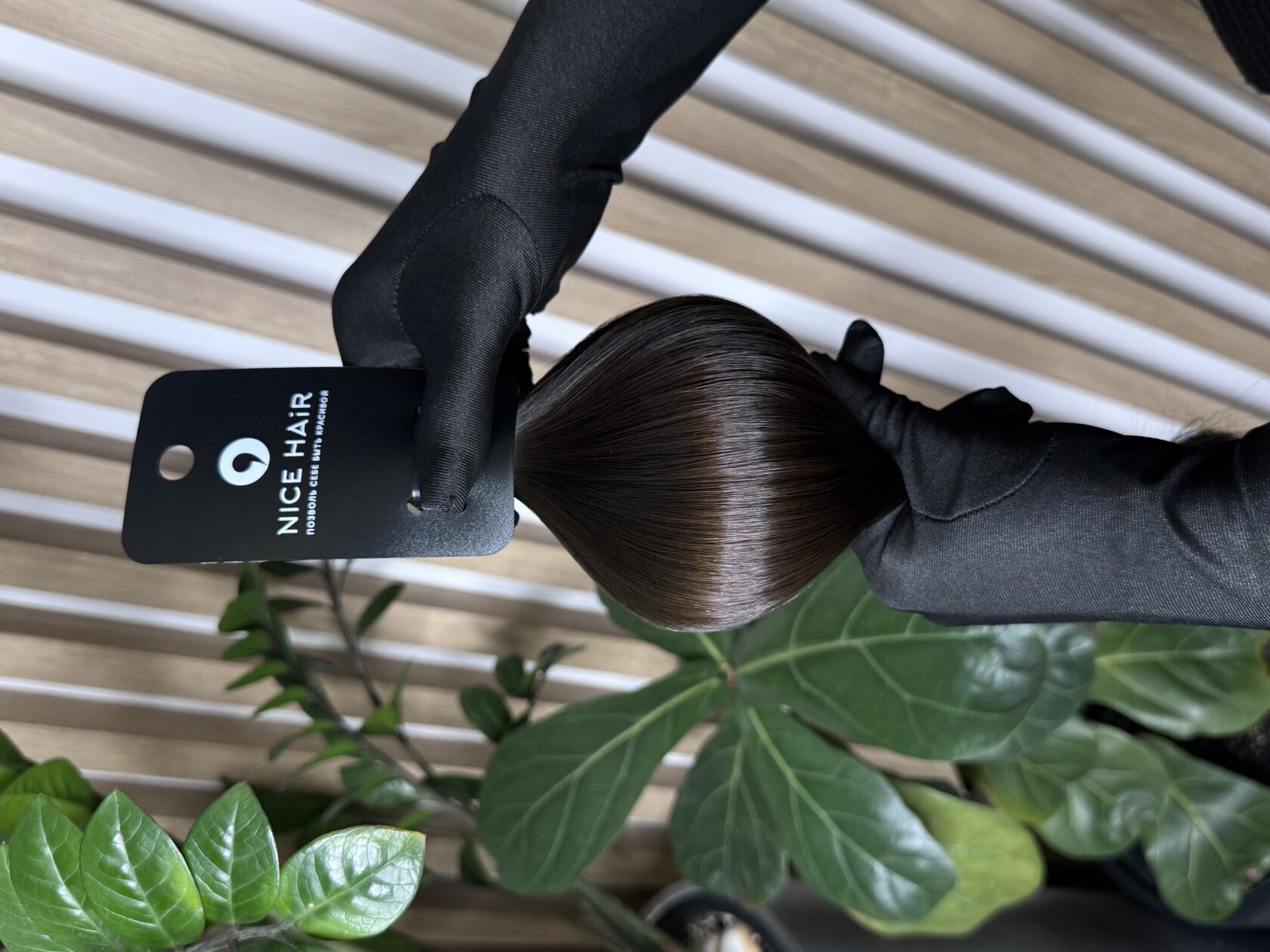
It helps to review different weft types and their weight when you compare suppliers, because construction method and the way bundles are prepared change how weight is distributed and how much is lost to trimming and blending.
Buying mistakes that cost more than hair
- Ordering excess hair just in case, which ties up budget and complicates shade control for next client.
- Assuming low per-gram price means lower total cost without adding shipping, prep time, and blending.
- Treating average usage from social media as a rule for every client. Result depends on cut, density, technique.
- Ignoring bond weight — same grams can give different coverage if bond size differs.
Keep supplier answer about weighing method, inclusion of attachments, and tip condition with order record. If first order from source, request small sample or additional unedited photos. Inspect delivery against order before preparing bonds, and keep neutral-light photos of client hair for future stock decisions.
B2B checklist: how to calculate grams without overbuying
Use this pre-order sheet before you pay:
- Natural data: length at three points, density at crown/temples/nape, haircut type, goal.
- Bond plan: standard vs micro, planned count at perimeter vs crown, weight per bond as stated by supplier.
- Usable length: subtract expected blending trim 1-3 cm, note if wavy shrinkage 2-5 cm needs compensation.
- Math check: count = total grams / weight per bond. Does count match placement you sketched? If not, adjust grams.
- Supplier confirmation in writing: weight is hair only, tolerance, return for unopened bundles.
- Photo archive: client daylight photos and loose bundle photo on neutral background.
Treat all numbers as a guide. Small test install on mannequin with same bond size can show real coverage before you commit to bulk.
How to explain gram choice to a client
Clients often ask “how many grams do I need?” and expect one fixed number. Explain that grams depend on their density and haircut, not just desired length. Use visual: hold two bundles of same weight but different bond size, show how micro-bonds spread weight more gently.
Pitch example: “For your density, we estimate around 80-110 g as a guide, depending on how many micro-bonds we place around temples to keep tension low. If we go heavier, line may look too thick and grow out less comfortably.” Mention that correction interval depends on growth and care, and if they feel pain or itching with inflammation, they should contact you promptly and, if needed, consult a professional. Do not promise zero shedding.
Inventory tips for gram-based stock
Don’t stock only 100 g packs. Keep flexible lots: 50 g low-density fine-hair replenishment, 100 g standard, smaller micro-bond refill packs. Label bins with weight, bond size, shade family, texture, date of arrival, and sample wash result. Store flat, dry, away from sunlight, with order card inside. Use FIFO to avoid old stock drying out or tangling. Track which grams sold fastest per season — volume sets often move faster in spring.
If a lot had many short pieces reducing usable fullness, note that on bin so next buyer does not repeat. This keeps budget liquid and reduces leftover fragments that cannot be used for full-head installs. Review stock monthly and move slow lots to promo for volume-only services.
Mini-case: planning grams for two different clients
Case A: dense medium-length client with blunt bob wants length to 55 cm. Density high at crown, moderate at temples. Blunt line needs extra weight to hide transition. Plan 120-140 g as a guide with mix of 0.8 g standard bonds at back and 0.6 g micro at front for comfort.
Case B: fine low-density client wants volume only, same length. Temple density low, fragile zones marked. Plan 50-70 g with micro-bonds only, distribute widely, avoid overloading nape. Same nominal length, half the grams. Treat both as guides — sketch placement before ordering, confirm tolerance with supplier, and keep client photos attached.
Aftercare handout: help client keep weight comfortable
Give client short note:
- First 72 hours: avoid tight high ponytails, avoid heavy oils at bond line, sleep on silk pillow or low braid.
- Wash: lukewarm water, gentle shampoo without aggressive scrubbing at roots, conditioner mid to ends. Air-dry gently or rough-dry on low heat, keeping dryer away from bonds.
- Brush: soft loop brush, start at ends, hold roots, work up. Do not rip through bonds.
- Lifestyle: if frequent swimming or gym, rinse after and avoid leaving damp hair in bun for long.
- Maintenance: book correction as agreed, typically 2-3 months as a guide. If pain, redness, or persistent tension appears, do not self-remove — contact stylist and, if needed, a professional.
This improves retention and reduces complaints that weight was wrong when issue was actually care. Remind client that feel depends on both salon placement and home routine.
10.11.2026
See also
